Leadership Without the Title: How Senior ICs Prove Promotion Readiness on a Resume
Senior Tech Recruiter @ Career Insight Labs
Mar 30, 2026

I placed a Staff Engineer at a Series D startup last quarter. His previous title? "Senior Software Engineer." No "Lead," no "Principal," no "Manager" anywhere on his resume.
His offer: $420K total comp. The hiring manager's note after the onsite: "Clearly already operating at Staff scope — the title just hadn't caught up yet."
Here's the problem most Senior ICs don't realize they have:
Your title says "Senior Engineer," but your actual work scope is Staff-level. If your resume doesn't make that gap visible, the ATS and the recruiter both default to your title — and you get leveled down before anyone reads a single bullet.
This article covers: the four dimensions of "untitled leadership" that ATS and hiring managers actually look for, how to surface each one on your resume, and a complete Before/After rebuild.
1. The Hidden Tax of Staying IC
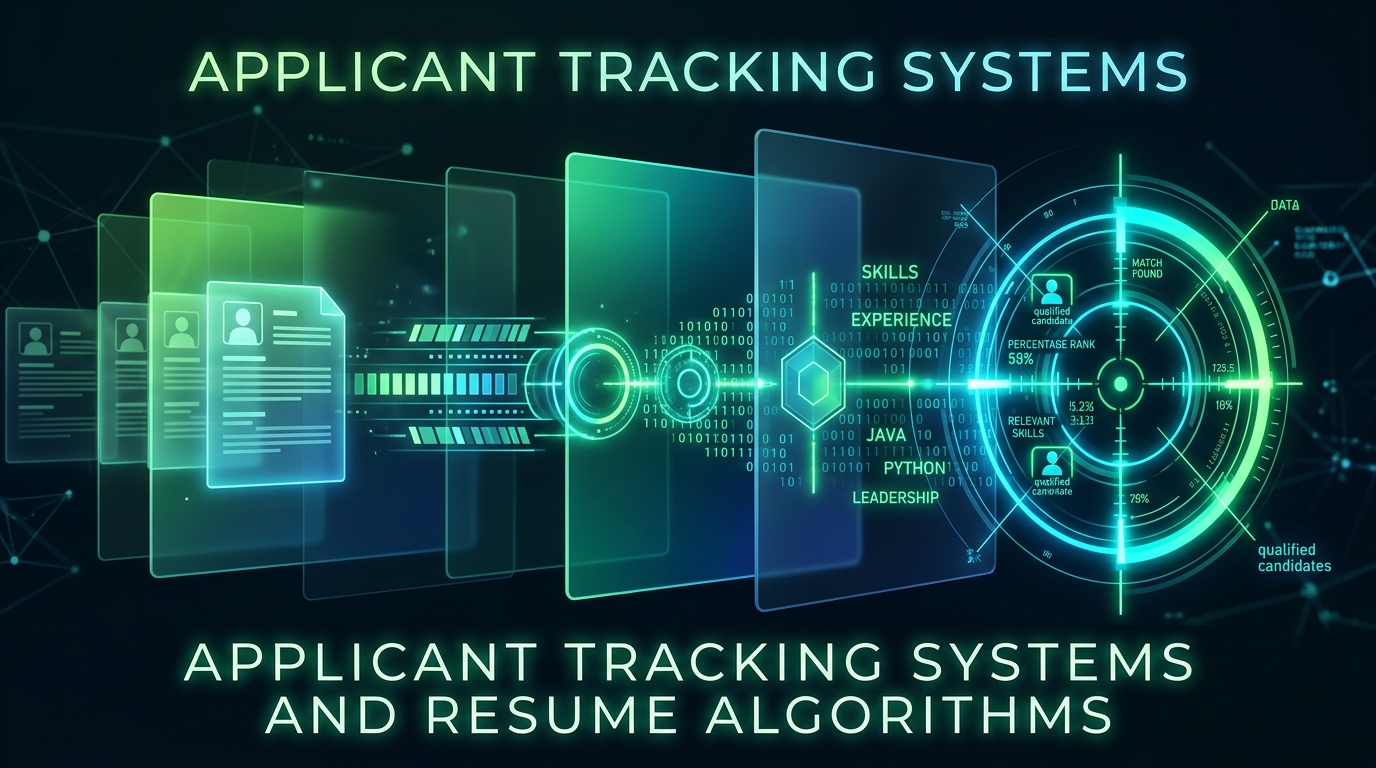
In 2026, ATS platforms (Greenhouse, Eightfold, Workday) all run some version of Career Trajectory Analysis. If your last three roles all say "Senior Software Engineer" with no title progression, the algorithm assigns a low Title Velocity score — even if your actual scope doubled each time.
The algorithm isn't wrong. It's just blind to what isn't written down.
The fix isn't asking your manager for a title bump. The fix is making your resume tell the leadership story your title doesn't.
Senior ICs demonstrate leadership across four dimensions. Most resumes mention none of them.
2. The Four Dimensions of Untitled Leadership
Dimension 1: Technical Decision Authority
What it means: You didn't just execute decisions — you made them. And the decisions affected work beyond your individual scope.
Signals the ATS and recruiter look for:
- Technology / architecture choices you initiated and drove
- Technical standards you set that other teams adopted
- Migration or deprecation decisions you led
❌ Wrong (execution-only language):
- Built microservices using Java and Spring Boot
- Migrated legacy services to Kubernetes
- Used React for frontend development
Every bullet here describes what you used, not what you decided. The candidate looks like a skilled executor, not a technical leader.
✅ Right (decision-authority language):
- Selected Java + Spring Boot over Node.js for the payment platform
  rewrite after evaluating both stacks against 6 criteria (latency
  requirements, hiring pipeline, existing team expertise, observability
  ecosystem, cloud costs, vendor risk). Decision adopted as the team
  standard for 4 subsequent services.

- Initiated and drove the migration from ECS to Kubernetes across 14
  services, authoring the migration playbook that 3 other teams later
  adopted. Cut infrastructure spend by $210K/year through bin-packing
  optimization discovered during the migration.

- Established React + TypeScript as the frontend standard across the
  40-engineer org after a 3-month evaluation, replacing a fragmented
  mix of Angular, Vue, and vanilla JS. Wrote the starter kit and coding
  standards adopted by all 6 product teams.
Notice the shift: each bullet starts with a decision verb (Selected, Initiated, Established) followed by scope of impact (4 subsequent services, 3 other teams, 40-engineer org).
Dimension 2: People Influence (Without Management Authority)
What it means: You grew people around you — not because it was in your job description, but because you're the engineer others seek out.
Signals the ATS and recruiter look for:
- Mentorship with measurable mentee outcomes
- Onboarding/system-building that scaled beyond your immediate team
- Interviewing/hiring contributions
❌ Wrong:
- Mentored junior developers
- Helped with onboarding
- Participated in interviews
"Helped with" and "Participated in" are the lowest-signal phrases on any resume. They say: "I was in the room." Not: "I made a difference."
✅ Right:
- Mentored 4 engineers across 2 teams over 18 months. Designed a
  structured growth framework (technical writing, system design,
  code review skills — 10 sessions per track) that two mentees
  credited in their promotion packets to Senior.

- Built the team's onboarding accelerator: a self-service dev
  environment setup script, an architecture decision log (42 ADRs),
  and a curated "first 10 PRs" progression path. Reduced new-hire
  time-to-productivity from 6 weeks to 11 days. Adopted by 3 other
  teams.

- Conducted 60+ technical interviews over 3 years. Redesigned the
  team's coding exercise to better assess system design thinking
  (previously focused on algorithm puzzles). Post-change, new-hire
  90-day performance ratings improved by 22%.
The pattern: number of people impacted + structure you built + measurable outcome. Not "I mentored." I built a system that grew people at scale.
Dimension 3: Cross-Team / Cross-Org Influence
What it means: Your technical influence extended beyond your immediate team. Other teams made different decisions because of your work.
Signals the ATS and recruiter look for:
- Shared infrastructure, libraries, or standards used by other teams
- Technical decisions that aligned multiple teams
- Internal talks, documentation, or tooling with org-wide adoption
❌ Wrong:
- Worked with other teams on shared services
- Gave technical presentations
- Wrote internal documentation
No scope, no scale, no outcome. Generic "collaboration" language that a hundred other resumes use.
✅ Right:
- Designed and shipped an internal API gateway now used by 8 product
  teams, handling 40K QPS. Wrote the migration guide and held 6
  onboarding workshops. Cut cross-team integration time from ~3 weeks
  to ~2 days for new service launches.

- Authored the org's "Production Readiness Checklist" (adopted as
  the standard by all 12 engineering teams). Defined criteria across
  observability, alerting, load testing, and failover. Post-adoption,
  Sev-1 incidents from new service launches dropped by 67%.

- Gave 8 internal tech talks over 2 years (topics: event sourcing,
  Kafka exactly-once semantics, Postgres query optimization). Average
  attendance: 60+ engineers across 4 offices. Three talks were later
  adapted into the company's onboarding curriculum.
The key: how many teams / people adopted your work. Without the adoption number, you described an activity. With it, you described organizational leverage.
Dimension 4: Organizational Impact Beyond Code
What it means: You changed how the engineering org operates — process, culture, hiring, or strategy — not just what it ships.
Signals the ATS and recruiter look for:
- Process changes you championed
- Hiring or team-structure contributions
- Cost / efficiency improvements at the org level
❌ Wrong:
- Improved team processes
- Participated in sprint planning
- Helped with cost optimization
"Participated" and "Helped with" — same low-signal trap.
✅ Right:
- Championed the team's transition from 2-week sprints to Kanban after
  analyzing 18 months of cycle-time data and showing that 70% of tasks
  were interrupt-driven. Post-transition: lead time dropped from 9 days
  to 4 days, team satisfaction score rose from 6.2 to 8.4.

- Led the hiring pipeline redesign for the platform team: rewrote 4 JD
  templates to emphasize system design over algorithm skills, added a
  take-home architecture exercise, and trained 8 interviewers on
  structured scoring rubrics. Time-to-fill dropped from 67 days to 38 days.

- Identified $340K/year in AWS waste through a Python-based cost
  attribution dashboard. Convinced 4 team leads to adopt weekly cost
  reviews. Reduced org-wide cloud spend by 18% within one quarter with
  zero service degradation.
Each bullet answers three questions: What did you change? What data or argument did you use? What was the measurable result?
3. Before & After: The Senior IC Who Was Already Staff
❌ Before: A Senior Engineer Resume That Reads Mid-Level
WORK EXPERIENCE
Senior Software Engineer | Company X | Jan 2022 - Present

- Developed microservices using Java and Spring Boot
- Used Kafka for event-driven architecture
- Migrated services from ECS to Kubernetes
- Mentored junior team members
- Participated in technical design discussions
- Worked with other teams on shared infrastructure

Senior Software Engineer | Company Y | Jun 2019 - Dec 2021

- Built REST APIs using Node.js
- Maintained CI/CD pipelines
- Wrote unit tests and integration tests
- Participated in code reviews
What the ATS sees:
- Title Velocity: 0 (Senior → Senior, no movement in 7 years)
- Leadership signals detected: 0
- Cross-team influence signals: 0
- Level assessment: Mid-level, not Senior. Certainly not Staff.
What the recruiter sees: A competent executor. Hasn't led anything. Hasn't changed anything. Hasn't grown anyone. Two identical "Senior Engineer" entries that could describe the same 6-month experience repeated for 7 years. Pass.
✅ After: Same Person, Leadership Story Told
WORK EXPERIENCE
Senior Software Engineer (Architect-track, de facto Tech Lead) |
Company X | Jan 2022 - Present

- Selected Java + Spring Boot over Node.js for the payment platform
  rewrite after a formal 6-criteria evaluation. Decision became the
  standard for 4 subsequent services across the org.

- Initiated and drove the ECS-to-Kubernetes migration across 14 services.
  Authored the migration playbook later adopted by 3 other teams.
  Uncovered bin-packing optimization that cut infrastructure spend by
  $210K/year.

- Designed an internal API gateway now used by 8 product teams (40K QPS).
  Held 6 onboarding workshops. Slashed cross-team integration time from
  ~3 weeks to ~2 days for new service launches.

- Built a structured mentoring framework (10 sessions, 3 tracks) adopted
  by 2 teams. Mentored 4 engineers — two credited the program in their
  promotion packets to Senior.

- Championed the team's transition to Kanban using 18 months of cycle-time
  data. Lead time dropped from 9 to 4 days. Team satisfaction rose from
  6.2 to 8.4.

- Redesigned the team's hiring pipeline (4 JD rewrites, architecture
  take-home exercise, interviewer scoring rubrics). Time-to-fill dropped
  from 67 to 38 days.

Senior Software Engineer | Company Y | Jun 2019 - Dec 2021

- Built the company's first event-driven architecture on Kafka, replacing
  a cron-based batch system. Reduced data freshness latency from 4 hours
  to under 2 minutes — enabling near-real-time analytics for the first time.

- Established the team's CI/CD standards (GitHub Actions, Docker, ECS
  deployment pipeline) later adopted by 4 other teams. Reduced deploy
  time from ~2 hours to ~12 minutes.
What the ATS sees:
- Title Velocity: upward signal ("Architect-track, de facto Tech Lead" prefix)
- Leadership signals: 4 dimensions × 1-2 bullets each = high behavioral evidence score
- Cross-team influence: adoption by 3 teams, 8 teams, 2 teams, 4 teams
- Level assessment: Staff-ready IC. Fast-track to hiring manager review.
Same person. Same years of experience. Same companies. Nothing was fabricated — only the leadership story was surfaced.
4. How to Find Your Own Untitled Leadership Stories
Most Senior ICs have leadership stories they've never thought to write down. Here's a prompt to mine them:
- Decision: What's a technology choice you made that other people later followed?
- Growth: Name two engineers who are better at their job because of something you taught them. What exactly did you teach?
- Adoption: What did you build that people outside your immediate team use? How many people?
- Change: What process or practice exists on your team today that didn't exist before you joined? Did you champion it or just comply with it?
If you can answer any of these with specifics, you have untitled leadership material.
5. CTA: Let Your Resume Tell the Story Your Title Doesn't
The gap between your actual scope and your official title is lost money. Every month you operate at Staff level with a Senior-level resume, the market prices you at Senior.
That's what our AI-Resume-Builder Leadership Signal Detector is built for:
- Prompts you through the four leadership dimensions (Decision, People, Cross-Team, Org Impact) with guided questions to surface stories you've never written down
- Auto-detects "execution-only language" (built/used/worked on) and suggests upgrades to decision-authority phrasing
- Flags missing scope indicators — if your bullet says "built X" but doesn't say who adopted it, the tool prompts: "How many teams used this? What changed because it existed?"
- Simulates the ATS Title Velocity score so you can see how title prefixes like "(Tech Lead)" or "(Architect-track)" change your trajectory rating
Your title lagging behind your scope is normal in fast-growing companies. Your resume lagging behind your scope is a choice.
👉 Run the Leadership Signal Detector on your resume — free
SEO Tags (Technical SEO Output)
HTML <title> tag
<title>Leadership Without Title: Senior IC Resume Promotion Signals</title>
<meta description>
<meta name="description" content="Your title says Senior but your scope is Staff — and your resume hides it. A recruiter breaks down 4 untitled leadership dimensions with wrong/right examples and a Before/After rebuild.">
Schema.org JSON-LD
{
  "@context": "https://schema.org",
  "@type": "Article",
  "headline": "Leadership Without the Title: How Senior ICs Prove Promotion Readiness on a Resume",
  "description": "A deep breakdown of the four untitled leadership dimensions — Technical Decision Authority, People Influence, Cross-Team Scope, and Organizational Impact — that Senior ICs must surface on their resumes to signal Staff-readiness, with complete Before/After examples.",
  "image": "https://ai-resume-builder.com/og/leadership-without-title-ic.png",
  "author": {
    "@type": "Person",
    "name": "Senior Tech Recruiter",
    "url": "https://ai-resume-builder.com/about"
  },
  "publisher": {
    "@type": "Organization",
    "name": "AI-Resume-Builder",
    "logo": {
      "@type": "ImageObject",
      "url": "https://ai-resume-builder.com/logo.png"
    }
  },
  "datePublished": "2026-06-06",
  "dateModified": "2026-06-06",
  "mainEntityOfPage": {
    "@type": "WebPage",
    "@id": "https://ai-resume-builder.com/blog/leadership-without-title-senior-ic"
  },
  "keywords": "Senior IC leadership resume, Staff Engineer promotion signals, untitled leadership, technical decision authority, IC career trajectory, resume promotion readiness, no title leadership"
}