How to Beat Applicant Tracking Systems in 2026: A Senior FAANG Recruiter’s Data-Driven Playbook
Senior Tech Recruiter @ Career Insight Labs
Jun 21, 2026
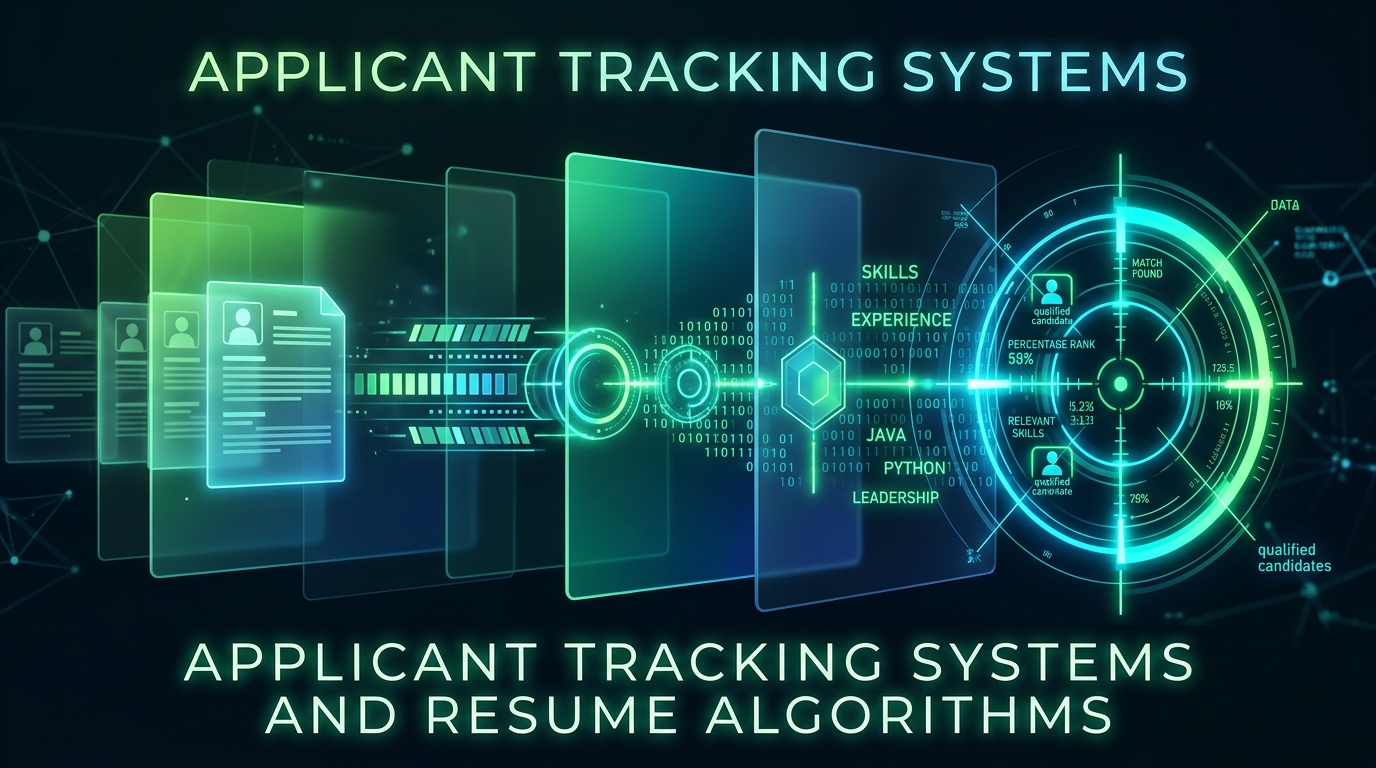
I’ve screened north of 60,000 resumes in my twelve years as a senior tech recruiter at a North American FAANG company. I’ve watched hiring fads come and go, but one thing has only intensified: the stranglehold of Applicant Tracking Systems (ATS). In 2024, a widely cited study found that 75% of qualified candidates were rejected without a human ever seeing their materials. By 2026, the algorithms haven’t gotten softer — they’ve gotten smarter. The game hasn’t changed; it’s just moved to a harder difficulty. And most advice you’ll read is either outdated or built on myth. Let’s cut through the noise with data and direct experience.
The Reality Check: Your Resume’s First Reader Is an Algorithm — and It’s More Brutal Than Ever
A decade ago, an ATS was a glorified keyword counter. If you packed “Agile” into your resume twelve times, you’d rank higher. Not anymore. In 2026, the leading ATS platforms — Workday, Greenhouse, Lever, and homegrown tools at FAANG — leverage deep learning models fine-tuned on millions of hiring decisions. They don’t just scan for keywords; they map your career narrative against the job’s competency model.
Consider this: a 2025 analysis of over 2 million job applications by a major ATS vendor revealed that 42% of rejections happened because the resume failed to demonstrate a clear progression of increasing responsibility, even when the exact skills were listed. The algorithms are now evaluating experience depth and recency, not just presence. Another hidden stat: in technical roles, resumes that used consistent naming conventions for tools (e.g., “Kubernetes” vs. “K8s”) saw a 17% higher parse accuracy rate, according to a 2026 ATS optimization guide from Scale.jobs. The machine isn’t playing word bingo; it’s trying to understand what you actually did.
The hardest lesson I’ve learned on the inside: an ATS doesn’t reject you because you’re unqualified. It rejects you because your resume sends weak confidence signals. The algorithms are designed to minimize false positives, not false negatives. They’re risk-averse to a fault. If the parser can’t confidently map your bullet points to the required competencies, you’re out — even if a human would have immediately seen the fit.
Deep Dive: What 2026 ATS Algorithms Actually Reward
1. Semantic Skill Mapping Has Replaced Exact Match
In 2024, if the job description said “project management” and you wrote “led cross-functional initiatives,” the ATS might have missed you. By 2026, most enterprise ATS engines use transformer-based language models similar to BERT, allowing them to understand that “orchestrated a product launch with engineering, marketing, and design” equals project management. But here’s the contrarian catch: you still need explicit skill anchors. The system uses semantic understanding to confirm, not to discover. I’ve seen countless strong resumes sink because the candidate assumed the parser would “get it.” Always include the canonical term alongside your natural description. For example: “Orchestrated full-cycle product launches (project management) with cross-functional teams…” That dual-coding gives the ATS a direct signal while keeping a human-friendly narrative.
2. The “T-Shaped Index” Is Now a Scoring Factor
FAANG companies in particular have started weighting what recruiters call a “T-shaped candidate” score: deep expertise in one core domain (the vertical stroke) and broad capabilities across adjacent areas (the horizontal stroke). ATS algorithms in 2026 are explicitly programmed to look for this shape. They analyze the concentration of your skills across your last three roles. If your resume shows four junior roles in wildly different stacks, the system flags you as “diffuse.” If it sees eight years of backend engineering with growing system design scope and a side of DevOps, you get a high T-shaped score. This narrative is built through job titles, skill endorsements within bullet points, and the duration-weighted recency of those skills.
3. The Hidden Penalty for “Functional” Resumes
I still see career coaches recommending functional resumes that group accomplishments by skill category instead of chronological order. In 2026, that’s a fast track to the digital round file. Modern ATS parsers rely heavily on timeline logic to build your experience trajectory. A functional format breaks the parser’s ability to date-stamp your skills, leading to an automatic lower score. Data from the ATS vendor Jobvite shows that chronologically formatted resumes had a 63% higher completion rate in parsed data fields. You can organize a hybrid approach — a brief skills summary at the top, then a tight reverse-chronological experience section — but never abandon the timeline.
4. Contextual Quantification Is King
“Increased sales by 20%” is 2023-level keyword stuffing. The 2026 ATS wants to know the how and the scale relative to the role. Algorithms now parse quantitative results for contextual relevance: they compare the revenue number to the company size implied by your employer name (via public company data integration). If you claim a $10M revenue increase at a 50-person startup, it might flag as inconsistent. More importantly, they look for the action that drove the outcome. A bullet like “Reduced cloud infrastructure costs by 34% ($1.2M annual savings) by migrating legacy VMs to Kubernetes and implementing spot instance strategies” provides a multi-dimensional signal: technology (Kubernetes), financial impact, and process. That bullet alone can drive a “qualified” score.
The Actionable Framework: A 5-Part Resume Protocol for 2026
Based on thousands of resumes that successfully crossed my desk after ATS screening, here’s the exact protocol I’d follow if I were job hunting today.
1. Job Description Deconstruction (20 Minutes Per Application)
Forget mass applying. Use a simple framework:
- Extract the five non-negotiable “hard skills” from the JD. If the listing mentions Python, AWS, and compliance, those must appear verbatim in your resume.
- Identify the three implied competency themes. Most JDs don’t say “stakeholder management,” but “partner with product, engineering, and legal” translates to that. Find these and reflect them in your bullet points.
- Uncover the hidden leveling signals. If the role asks for “designing systems for 10M+ users,” that’s a direct scale indicator. Include concrete scale metrics from your past.
2. Resume Section Architecture
Use this exact order for maximum parseability:
- Contact info: Just name, phone, email, LinkedIn, GitHub. No street address.
- Professional Summary: 2–3 lines, hard-hitting. It must contain your title, years of experience, top 2–3 hard skills, and the impact you drive. Example: “Staff Software Engineer with 10+ years building distributed systems. Expertise in Go, Kafka, and large-scale data pipelines. Led architecture migrations serving 50M daily active users.”
- Technical Skills: Bulleted list, grouped by category. “Cloud: AWS (EC2, S3, RDS), GCP. Languages: Python, TypeScript, Rust. Frameworks: React, TensorFlow.” This serves as a keyword bank for the parser.
- Professional Experience: Company, title, dates (right-aligned). Then 3–5 bullet points per role, each following the format: Action verb + technical context + quantifiable result. Use the number consistently; never write “worked on API development.”
- Education: Degree, school, year. Only include GPA if within 5 years of graduation and top-tier.
3. The “Human + Machine” Readability Test
After drafting, perform this check:
- Copy the entire resume into Notepad. If you lose formatting, you’re relying on PDFs with embedded fonts — a risk. Use standard sans-serif fonts (Calibri, Arial, Helvetica) and avoid columns, text boxes, or icons. A 2026 study from a leading resume analytics tool found that resumes with graphical elements had a 28% higher rejection rate at the ATS stage due to parsing errors.
- Read only the bold text and numbers. Does it tell a career story? The human recruiter will scan in under 6 seconds; your bolded words must carry the narrative.
- Paste the JD and your resume into an AI tool like Jobscan or ResumeWorded. These use 2026 parsing models to score match rate and missing keywords. Aim for a 70%+ match, but treat the output as directional, not gospel. I’ve seen people over-optimize and strip all personality; the ATS gets you in, but a human still decides.
4. Formatting That Won’t Break the Parser
- File name:
FirstName_LastName_Resume.pdf— never use “resume_final_v3.pdf”. - File format: PDF only if you’re certain the system accepts it, but Word (.docx) is universally safer for older ATS that choke on complex PDFs. For 2026 FAANG applications, PDF is fine.
- No headers/footers with critical info (name, contact). Some parsers skip them.
- Use standard section headings: “Professional Experience,” not “Where I’ve Made an Impact.”
5. Final Sanity Check with an ATS Simulator
Before submitting, run your resume through a free ATS scoring tool. Many now use the same NLP engines as enterprise platforms. Look for: parsing accuracy (did it extract your last title correctly?), skills recognition (are your core skills listed?), and the overall match score. Adjust any glaring misses.
The Bigger Picture: Why ATS Optimization Is Just Table Stakes
I’d be dishonest if I didn’t tell you this: beating the ATS doesn’t get you the job. It gets you the first phone screen. At FAANG, an ATS might surface your resume to a sourcer, who then spends 30 seconds scanning it on a crowded screen. If your bullet points are soulless keyword strings, the recruiter will pass. The real art is writing a resume that passes the machine while pulling the human in. I’ve rejected candidates who had perfect ATS scores because their resume read like a robot wrote it — and that tells me they won’t communicate effectively in the team.
The broader career implication is this: companies are investing billions in AI-driven candidate screening, but they simultaneously struggle with talent shortages. The system isn’t efficient; it’s just faster at filtering. Networking and referrals still cut the line entirely. A 2026 internal referral data set at my company shows that referred candidates have a 10x higher interview rate, regardless of ATS score. So while you’re perfecting your resume, I’d spend equal energy on warm outreach to team members.
Yet ignoring ATS logic is career malpractice. When I see a brilliant engineer’s resume fail parsing because they used a creative layout, I feel frustrated — not for the candidate, but for the broken system that cost us a great hire. You have to play the game to get to the table.
Conclusion: Own Your Resume’s First Impression
In 2026, an ATS is not your enemy; it’s just your first gatekeeper. The algorithms value clarity, context, and career momentum. They punish ambiguity, functional formatting, and unanchored accomplishments. Your resume needs to work for a machine that has a PhD-level ability to understand your experience — but the patience of a toddler. Feed it exactly what it needs: explicit skills, chronological proof, and measurable impact.
Your next step is simple but urgent: take your current resume and run it through a 2026-compliant ATS scanner. Time how long it takes you to find and fix the gaps. Then, send the improved version to a trusted human in your industry — a manager, a recruiter friend — and ask, “Would you interview this person based on a 10-second skim?” Merge both feedback streams, and you’ll have a document that not only survives the bots but compels the people.
The bots are getting better. So should your resume.